Teng Li's blog

MRS Bulletin features Macroelectronics

Submitted by Teng Li on

The June 2006 issue of MRS Bulletin features Macroelectronics.

The guest editor of this issue include Robert H. Reuss (program manager of DARPA's macroelectronics program), Darrel G. Hopper (principal electronics engineer at US ARFL), and Jae-Geun Park (Materials Center at Samsung Advanced Institute of Technology)

The issue include a theme review article by the guest editors and four theme technical articles covering various topics related to macroelectronics.


(via www.macroelectronics.org)

Strength map of carbon nanotube

Submitted by Teng Li on


In theory, carbon nanotubes are 100 times stronger than steel at one-sixth the weight, but in practice, scientists have struggled make nanotubes that live up to those predictions. This is partly because there are still many unanswered questions about how nanotubes break and under what conditions.

Recently, Prof. Boris I. Yakobson at Rice University, his former postdoc Traian Dumitrica (now assistant professor at University of Minnesota), and his doctoral student Ming Hua, have developed a new computer modeling approach to create a “strength map” that plots the likelihood or probability that a carbon nanotube will break—and how it’s likely to break. Four critical variables are considered in the model: load level, load duration, temperature, and chirality. This work was published in the Proceedings of the National Adacemy of Sciences (Apr. 18, 2006 Cover feature). Full text pdf file of this paper is available here.

Whence the Force of F=ma?

Submitted by Teng Li on

This is the title of a three-part series published in Physics Today by Frank Wilczek, the Herman Feshbach Professor of Physics at MIT. Prof. Wilczek is considered one of the world's most eminent theoretical physicists, and is the 2004 Nobel laureate in Physics for work he did as a graduate student at Princeton University, when he was only 21 years old.

Prof. Wilczek contributes regularly to Physics Today and to Nature, explaining topics at the frontiers of physics to wider scientific audiences. The following series of his "musing on mechanics" won the Best American Science Writing in 2005:
Whence the Force of F=ma? 1: Culture Shock
Whence the Force of F=ma? II: Rationalizations
Whence the Force of F= ma ? III: Cultural Diversity

Prof. Wilczek recently published a book named Fantastic Realities, in which 49 inspiring pieces, including the above three, of "mind journeys" are included. This book also includes contribution from his wife Betsy Devine's blog on what winning a Nobel Prize looks like from inside prizewinner's family.
You may also enjoy a recent podcast of Scientific American, in which Prof. Wilczek and his wife talk about their new book.

A Virtual Tour of the 1906 Great Earthquake in Google Earth

Submitted by Teng Li on

The California earthquake of April 18, 1906 (one century ago today) ranks as one of the most significant earthquakes of all time. Today, its importance comes more from the wealth of scientific knowledge derived from it than from its sheer size --it marked the dawn of modern science of earthquakes.

U.S. Geological Survey (USGS) recently provides a virtual tour utilizing the geographic interactive software Google Earth to explain the scientific, engineering, and human dimensions of this earthquake. This virtual tour can help you visualize and understand the causes and effects of this and future earthquakes.

Enjoy this virtual tour to explore how Google Earth (and other new softwares...) can facilitate and improve the way we teach and conduct research.

Organic LED could replace light bulb?

Submitted by Teng Li on

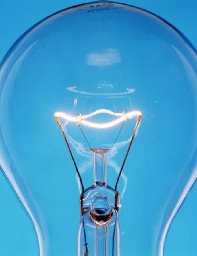
Lighting accounts for about 22% of the electricity consumed in buildings in the United States, and 40% of that amount is eaten up by inefficient incandescent light bulbs. The search for economical light sources has been a hot topic.

Recently, scientists have made important progress towards making white organic light-emitting diodes (OLEDs) commercially viable as light source. As reported in a latest Nature article, even at an early stage of development this new source is up to 75% more fficient than today's incandescent sources at similar brightnesses. The traditional light bulb's days could be numbered.

Read media report here.

(Via www.macroelectronics.org)

Online Journal Club on Flexible Electronics

Submitted by Teng Li on

For many years, people accumulate personal collections of academic publications of interest in paper form. As such collections grow with time, more file cabinets and book shelves are needed for storage. First, space becomes a problem. Second, finding a specific paper could be a headache, even if the collections are well categorized.

As more and more publications become available online in recent years, people gradually switch to collect electronic versions, e.g. PDF files of papers. These files are often stored in local hard drives. Space is not an issue anymore. But again, locating a paper from hundreds of files in tens of folders still might be a heck of efforts.

Besides the difficulty in searching, other common shortcomings include:

  • Locally stored, limited access flexibility.
  • Personally owned, not easy to share with other people. As a result, the scale of personal collections is often limited.
  • Redundently collected. Consider this: a same gem paper is manually archived by thousands of people individually.
  • Statically and passively maintained. Lack of interactions among people sharing common interests.

Any better idea? Here comes Web2.0, which is all about online collaboration. Among the numerous tools enabled by Web2.0, CiteULike could be the one able to solve the above issues for us. A previous post in AMN explored the possibility to form online journal club based on CiteULike. Here is an example.

CiteULike: Your online library of scientific literature, and more...

Submitted by Teng Li on

CiteULike is an online service to help academics to share, store, and organize the scientific literature. When you see a paper or a book on the web that interests you, you can click one button and have it added to your personal library. CiteULike automatically extracts the citation details (e.g., title, authors, abstract, and DOI). Currently, it supports more than 30 pubishing websites, many of which are of interest of mechanics community, e.g., ScienceDirect, AIP Scitation, Science, Nature, SpringerLink and Amazon.

Searching in your CiteULike library can be very easy. The surnames of all authors in your library are automatically tagged. You can also tag the papers and the books in your library as you like. All these tags appear in a tag cloud. Therefore, locating a paper in your library will be only one or two clicks away. Also, because your library is stored on the web server, you can access it from any computer.

You can also form a group, and integrate every member's own library to a group library. CiteULike also allows everyone to add note on papers or books. By combining the group and the note functions, you can easily form an online journal club among colleagues, collabarators, students, or any group with common interests, no matter how far away from each other.

Programmed by Richard Cameron and generously hosted by the University of Manchester in England, CiteULike is a free service to everyone. You just need to register to use its full functions. It all works within your web browser, no extra software is needed. So give it a try and enjoy.

Note: Nature publishing group also provides a similar service named Connotea. After experimenting both of them, I share the same feeling of many other users: while more attractive at the first sight, Connotea currently offer less flexible functions than CiteULike. I personally vote for CiteULike. You may want to share your experience with CiteULike or Connotea by commenting this entry.

Update on 4 July 2006:

Macroelectronics Journal Club, an online journal club focusing on flexible electronics and running on CiteULike platform, has been launched by www.macroelectronics.org. See a brief introduction here and detail announcement here.

Update on 14 July 2006:

By default, CiteULike stores links to papers. To get full access of a paper, you often need to locate the paper within the subscription of your institution, instead of its original link. By using a scalable bookmarklet, now localizing the paper links can be only as easy as one click away. See a recent iMechanica entry for details.

What can mechanics community learn from the success of Google?

Submitted by Teng Li on

A cartoon in The New Yorker magazine shows a boy asking his dad a question. The dad, reading a book, replies, “Go ask your search engine.” The cartoon was published in Feb. 2000, three months before Google officially became the world's largest search engine with its introduction of a billion-page index — the first time so much of the web's content was made searchable. If the boy asks again today, his dad will say, “Go ask Google.”

At $6 billion a year in revenue and $7.6 billion in cash, Google is a success. What’s more important to the rest of us, Google is running its business in a way that may change the world. Through its never-about-average products (i.e., Google search, Google Earth (and Mars too), Google Map, and more recently, Writely), Google is radically redefining the ways we obtain, organize, use, store, and share information.

Review Articles on Flexible Electronics

Submitted by Teng Li on

[img_assist|nid=46|title=|desc=|link=url,http://www.materialstoday.com/2006_issues/april.htm|align=right|width=75|height=100]The cover story of the April 2006 issue of Materials Today features Flexible Electronics. This issue also includes two review articles in this emerging field of research. Access to full text articles is free of charge at http://www.materialstoday.com.

Review Article:

Material challenge for flexible organic devices, by Jay Lewis

Review Article:

Organic and polymer transistors for electronics, by Ananth Dodabalapur

Cover Story:

Jet printing flexible displays, by R.A. Street et al.