
www.macroelectronics.org

Mechanics of flexible macroelectronics

Submitted by Teng Li on

The following entry was first posted in www.macroelectronics.org on 8 May 2006.

Flat-panel displays are rapidly replacing cathode-ray tubes as the monitors of choice for computers and televisions, a commercial success that has opened the era of macroelectronics, in which transistors and other micro-components are integrated over large areas. In addition to the flat-panel displays, other macroelectronic products include x-ray imagers, thin-film solar cells, and thin-film antennas.
Like a microelectronic product, a macroelectronic product consists of many thin-film components of small features. While microelectronics advances by miniaturizing features, macroelectronics does so by enlarging systems. Macroelectronic products today are mostly fabricated on substrates of glass or silicon; they are expensive, fragile and not readily portable when their areas are large. To reduce cost and enhance portability, future innovation will come from new choice of materials and of manufacturing processes. For example, thin-film devices on thin polymer substrates lend themselves to roll-to-roll fabrication, resulting in lightweight, rugged and flexible products. These macroelectronic products will have diverse architectures, hybrid materials, and small features. Their mechanical behavior during manufacturing and use poses significant challenges to the creation of the new technologies.

A recent review paper by Suo et al. describes ongoing work in the emerging field of research – mechanics of flexible macroelectronics, with emphasis on the mechanical behavior at the scale of individual features, and over a long time. The following topics have been discussed in the paper:
The Future of Cell Phone?

Submitted by Teng Li on

Here is one answer from Nokia.


Nokia 888 communicator, a concept design which recently won the Nokia's Benelux Design Award. It uses liquid battery, flexible touch display, speech recognition, touch sensitive body cover which lets it understand and adjust to the environment. It has a simple programmable body mechanism so that it changes forms in different situations. Don't forget to enjoy a video demo of this cell phone of future.
Yet one more future application of flexible electronics, it's clear there're great mechanics and materials challenges in making electronic devices flexible. It will be great mechanicians can help accelerate the advance of this emerging technology.

MRS Bulletin features Macroelectronics

Submitted by Teng Li on

The June 2006 issue of MRS Bulletin features Macroelectronics.

The guest editor of this issue include Robert H. Reuss (program manager of DARPA's macroelectronics program), Darrel G. Hopper (principal electronics engineer at US ARFL), and Jae-Geun Park (Materials Center at Samsung Advanced Institute of Technology)

The issue include a theme review article by the guest editors and four theme technical articles covering various topics related to macroelectronics.


(via www.macroelectronics.org)

Organic LED could replace light bulb?

Submitted by Teng Li on

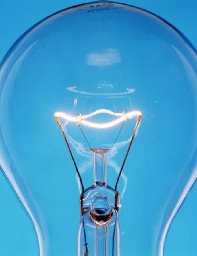
Lighting accounts for about 22% of the electricity consumed in buildings in the United States, and 40% of that amount is eaten up by inefficient incandescent light bulbs. The search for economical light sources has been a hot topic.

Recently, scientists have made important progress towards making white organic light-emitting diodes (OLEDs) commercially viable as light source. As reported in a latest Nature article, even at an early stage of development this new source is up to 75% more fficient than today's incandescent sources at similar brightnesses. The traditional light bulb's days could be numbered.

Read media report here.

(Via www.macroelectronics.org)

Online Journal Club on Flexible Electronics

Submitted by Teng Li on

For many years, people accumulate personal collections of academic publications of interest in paper form. As such collections grow with time, more file cabinets and book shelves are needed for storage. First, space becomes a problem. Second, finding a specific paper could be a headache, even if the collections are well categorized.

As more and more publications become available online in recent years, people gradually switch to collect electronic versions, e.g. PDF files of papers. These files are often stored in local hard drives. Space is not an issue anymore. But again, locating a paper from hundreds of files in tens of folders still might be a heck of efforts.

Besides the difficulty in searching, other common shortcomings include:

  • Locally stored, limited access flexibility.
  • Personally owned, not easy to share with other people. As a result, the scale of personal collections is often limited.
  • Redundently collected. Consider this: a same gem paper is manually archived by thousands of people individually.
  • Statically and passively maintained. Lack of interactions among people sharing common interests.

Any better idea? Here comes Web2.0, which is all about online collaboration. Among the numerous tools enabled by Web2.0, CiteULike could be the one able to solve the above issues for us. A previous post in AMN explored the possibility to form online journal club based on CiteULike. Here is an example.