research

Handbook of Materials Modeling

Submitted by Anonymous (not verified) on
by S. Yip (Editor), 2005

Book Review
"A new guide to materials modeling largely succeeds in its aim to be the defining reference for the field of computational materials science and represents a huge undertaking..." -- by James Elliott | University of Cambridge, Materials Today, Volume 9, Issues 7-8, July-Aug 2006, Pages 51-52.

The first reference of its kind in the rapidly emerging field of computational approachs to materials research, this is a compendium of perspective-providing and topical articles written to inform students and non-specialists of the current status and capabilities of modelling and simulation. From the standpoint of methodology, the development follows a multiscale approach with emphasis on electronic-structure, atomistic, and mesoscale methods, as well as mathematical analysis and rate processes. Basic models are treated across traditional disciplines, not only in the discussion of methods but also in chapters on crystal defects, microstructure, fluids, polymers and soft matter. Written by authors who are actively participating in the current development, this collection of 150 articles has the breadth and depth to be a major contributor toward defining the field of computational materials. In addition, there are 40 commentaries by highly respected researchers, presenting various views that should interest the future generations of the community. Subject Editors: Martin Bazant, MIT; Bruce Boghosian, Tufts University; Richard Catlow, Royal Institution; Long-Qing Chen, Pennsylvania State University; William Curtin, Brown University; Tomas Diaz de la Rubia, Lawrence Livermore National Laboratory; Nicolas Hadjiconstantinou, MIT; Mark F. Horstemeyer, Mississippi State University; Efthimios Kaxiras, Harvard University; L. Mahadevan, Harvard University; Dimitrios Maroudas, University of Massachusetts; Nicola Marzari, MIT; Horia Metiu, University of California Santa Barbara; Gregory C. Rutledge, MIT; David J. Srolovitz, Princeton University; Bernhardt L. Trout, MIT; Dieter Wolf, Argonne National Laboratory.

Saturated voids in interconnect lines due to thermal strains and electromigration

Submitted by Zhen Zhang on

Zhen Zhang, Zhigang Suo, Jun He

Thermal strains and electromigration can cause voids to grow in conductor lines on semiconductor chips. This long-standing failure mode is exacerbated by the recent introduction of low-permittivity dielectrics. We describe a method to calculate the volume of a saturated void (VSV), attained in a steady state when each point in a conductor line is in a state of hydrostatic pressure, and the gradient of the pressure along the conductor line balances the electron wind. We show that the VSV will either increase or decrease when the coefficient of thermal expansion of the dielectric increases, and will increase when the elastic modulus of the dielectric decreases. The VSV will also increase when porous dielectrics and ultrathin liners are used. At operation conditions, both thermal strains and electromigration make significant contributions to the VSV. We discuss these results in the context of interconnect design.


This has been published and the related references are listed here:

  • Z. Zhang, Z. Suo, and J. He, J. Appl. Physics, 98, 074501 (2005). link
  • J. He, Z. Suo, T.N. Marieb, and J.A. Maiz, Appl. Phys. Lett. 85, 4639 (2004). link


Electric Field May Promote Exfoliation of Clay Nanoplates

Submitted by Wei Lu on

Nanocomposite performance fundamentally relies on reproducible dispersion and arrangement of nanoparticles, such that the dominate morphology across macroscopic dimensions is also nanoscopic. To facilitate dispersion, chemical approaches, including surfactant or macromolecular stabilization are usually employed to modify the surface of nanoparticles. However, the approach depends on the material system and usually involves trial-and-error to identify the best practice. Much less quantitative information is available on the coupling between the surface modification and external processing factors, including shear, electric or magnetic fields. In a recent work, we considered electric field on the interaction of nano-plates. For ideal dielectrics an electric field may assist (or retard) exfoliation depending on the angle between a collection of plates and the field. A critical electric field strength to promote exfoliation is predicted when the field is parallel to the surface of the plates. Structural refinement is predicted to occur by cleavage through the center of the stack. For lossy dielectrics, frequency can be tuned to cause exfoliation in all plate orientations.

Critical Size of Stiff Islands on Stretchable Substrates due to Interface Delamination

Submitted by Nanshu Lu on

One possible design of stretchable integrated circuits consists of functional islands of stiff thin films on a polymer substrate. When such a structure is stretched, the substrate carries most of the deformation while the islands experience little strain. However, in practice, the island/substrate interface can never cohere perfectly. Existing experiments suggest that, interface debonding occurs if the island is larger than a certain size. I am now studying the critical size of stiff islands on stretchable polymer substrates due to thin film delamination, using finite element simulations. We show that the maximum energy release rate of interfacial cracking goes down as island size or substrate stiffness decreases. As a result, the critical island size can be enhanced if the substrate is chosen to be more compliant. An approximate formula is given to predict the energy release rate for the configuration of stiff islands on very compliant substrate.

A New Class of Composite Materials - Graphene-based Composite Materials

Submitted by Xiaodong Li on

Professor Rodney Ruoff and colleagues at Northwestern University and Purdue University have developed a process that promises to lead to the creation of a new class of composite materials - graphene-based materials. They reported the results of their research in Nature, 442 (2006) 282-286. This team has overcome the difficulties of yielding a uniform distribution of graphene-based sheets in a polymer matrix. Such composites can be readily processed using standard industrial technologies such as moulding and hot-pressing. The technique should be applicable to a wide variety of polymers. The graphene composites may compete with carbon nanotube-based materials in terms of mechanical properties. This new class of composites may stimulate the applied mechanics community to study the fundamental reinforcing mechanisms of graphene sheets from both experimental and theoretical approaches.

Interplay between elastic interactions and kinetic processes in stepped Si (001) homoepitaxy

Submitted by Wei Hong on

A vicinal Si (001) surface may form stripes of terraces, separated by monatomic-layer-high steps of two kinds, SA and SB. As adatoms diffuse on the terraces and attach to or detach from the steps, the steps move. In equilibrium, the steps are equally spaced due to elastic interaction. During deposition, however, SA is less mobile than SB. We model the interplay between the elastic and kinetic effects that drives step motion, and show that during homoepitaxy all the steps may move in a steady state, such that alternating terraces have time-independent, but unequal, widths. The ratio between the widths of neighboring terraces is tunable by the deposition flux and substrate temperature. We study the stability of the steady state mode of growth using both linear perturbation analysis and numerical simulations. We elucidate the delicate roles played by the standard Ehrlich-Schwoebel (ES) barriers and inverse ES barriers in influencing growth stability in the complex system containing (SA+SB) step pairs.

Preprint available in the attachment.

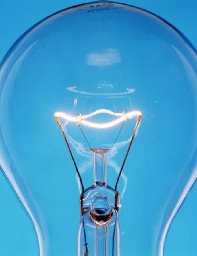
Organic LED could replace light bulb?

Submitted by Teng Li on

Lighting accounts for about 22% of the electricity consumed in buildings in the United States, and 40% of that amount is eaten up by inefficient incandescent light bulbs. The search for economical light sources has been a hot topic.

Recently, scientists have made important progress towards making white organic light-emitting diodes (OLEDs) commercially viable as light source. As reported in a latest Nature article, even at an early stage of development this new source is up to 75% more fficient than today's incandescent sources at similar brightnesses. The traditional light bulb's days could be numbered.

Read media report here.

(Via www.macroelectronics.org)

EPN - E-print Network

Submitted by Rui Huang on

I was notified today that my Web site (http://www.ae.utexas.edu/~ruihuang/) has been included in the E-print Network (EPN). EPN is a fast-growing searchable scientific network of over 20,000 Web sites containing research conducted by researchers - from Nobel Laureates to post-doctoral students - who are offering e-prints of their work via the Internet.

Developed by the Office of Scientific and Technical Information (OSTI) to facilitate the needs of the Department of Energy (DOE) research community, E-print Network enhances dissemination of important research and helps to create opportunities for productive professional contacts.

E-print Network indexes over 900,000 e-prints. Most documents included in the network are recent scientific literature. Functions available to users include conducting full-text searches, searching for documents by contributing author, establishing a personalized alert service to keep abreast of new e-prints, and exploring laboratory Web sites for further details about selected research programs.

Once users find a paper of interest, they can download it from the site hosting the paper. This way you control distribution of your e-prints and can more readily track Web interest in your papers.

My page is listed under both Engineering and Materials Science.

A molecular dynamics-decorated finite element framework for simulating the mechanical behaviors of biomolecules

Submitted by Xi Chen on

Our first paper in biomechanics is featured as the cover of the Biophysical Journal. The paper is attached. Several freelance writers in biophysics have reported this paper in magazines and websites/blogs. This framework is very versatile and powerful, and we are now implementing more details/atomistic features into this phenomenological approach, and the follow-up paper will be submitted soon.

Abstract: The gating pathways of mechanosensitive channels of large conductance (MscL) in two bacteria (Mycobacterium tuberculosis and Escherichia coli) are studied using the finite element method. The phenomenological model treats transmembrane helices as elastic rods and the lipid membrane as an elastic sheet of finite thickness; the model is inspired by the crystal structure of MscL. The interactions between various continuum components are derived from molecular-mechanics energy calculations using the CHARMM all-atom force field. Both bacterial MscLs open fully upon in-plane tension in the membrane and the variation of pore diameter with membrane tension is found to be essentially linear. The estimated gating tension is close to the experimental value. The structural variations along the gating pathway are consistent with previous analyses based on structural models with experimental constraints and biased atomistic molecular-dynamics simulations. Upon membrane bending, neither MscL opens substantially, although there is notable and nonmonotonic variation in the pore radius. This emphasizes that the gating behavior of MscL depends critically on the form of the mechanical perturbation and reinforces the idea that the crucial gating parameter is lateral tension in the membrane rather than the curvature of the